
Rafaga
Design & Construction
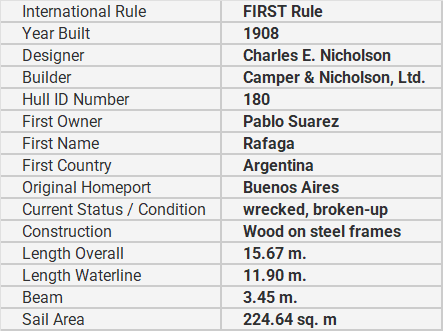
Ráfaga was built in 1908 to the International First Rule and holds a unique place in Twelve Metre history as the only Twelve originally built for an Argentine owner. Her construction marked the beginning of top-level Twelve Metre racing in South America.
Original Ownership & Argentine Introduction (1908–1913)
Owner: Pablo Suárez
Name: Ráfaga
Home Port: Buenos Aires, Argentina
Commissioned by Pablo Suárez, Ráfaga was based at Buenos Aires and was skippered in her early years by F. Stokes. Her arrival prompted the formation of an Argentine Twelve Metre fleet, later joined by Alachie and Mouchette, both purchased from their original owners in Europe and shipped to Argentina.
Together, the three yachts established a brief but historically important South American Twelve Metre scene.
Subsequent Ownership (1914–1923)
1914–1915: Abel Ezeiza
1916–1918: Owner unknown
1919: Adolfo Williams, member of the Yacht Club Argentino
1920–1923: Dr. José Diego Gornall
From 1920, Ráfaga appears in Lloyd’s Register, listed as “formerly International Rating Class 12 Metres”, confirming her First Rule Twelve status.
Later Ownership & Final Records (1924–1929)
1924–1928: Pedro Yriberry
1929: Final recorded year
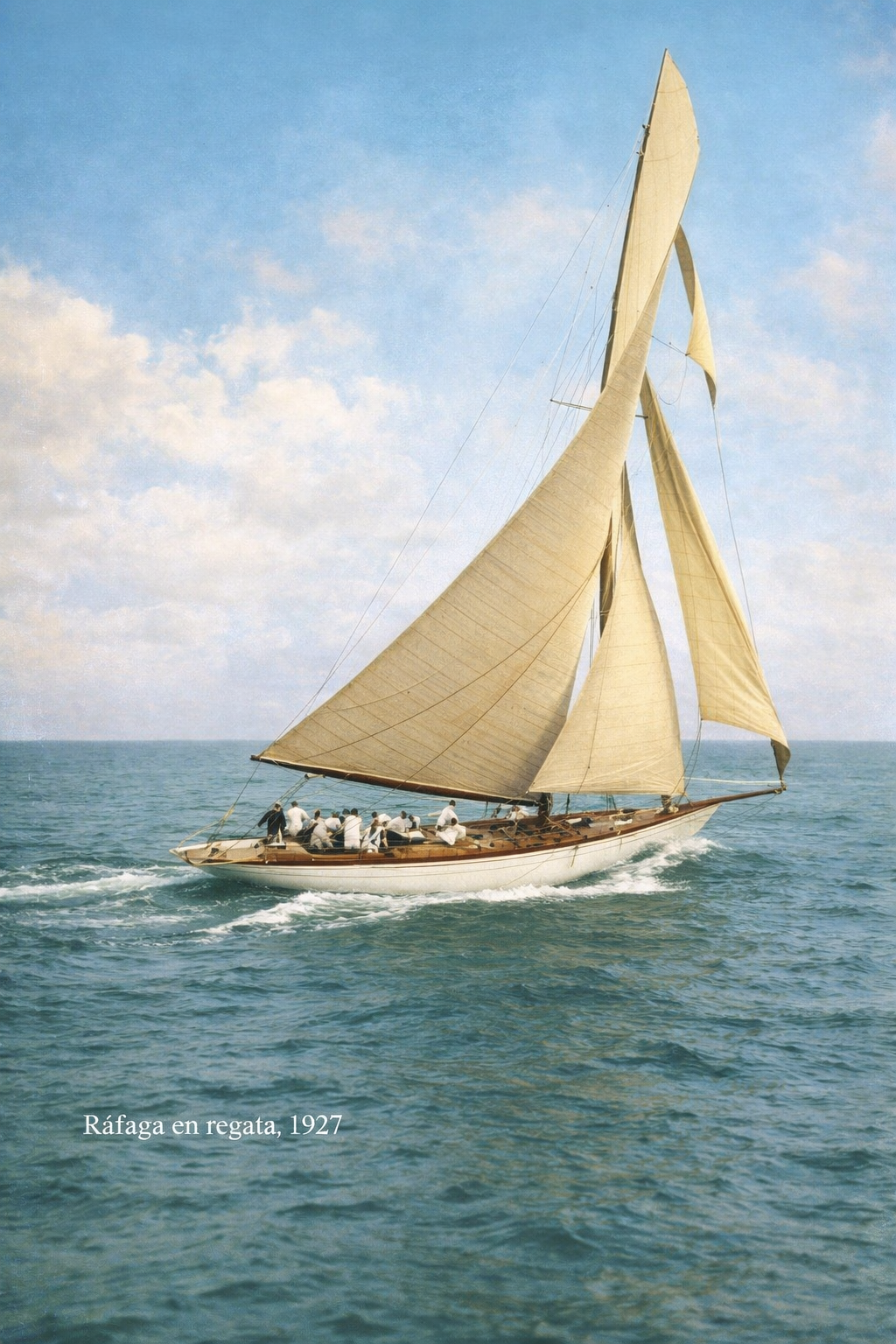
A 1927 photograph published in the Yacht Club Argentino yearbook shows Ráfaga racing alongside Alachie, with both yachts gaff-rigged, confirming that Ráfaga retained her original rig well into the 1920s.
After 1929, Ráfaga disappears from Lloyd’s Register, and no further confirmed records of her fate have been found.
Historical Significance
Ráfaga is notable for:
Being the only Twelve Metre originally built for an Argentine owner
Establishing the Argentine Twelve Metre fleet alongside Alachie and Mouchette
Demonstrating the early international spread of the Twelve Metre Class
Remaining gaff-rigged into the late 1920s, unlike many contemporaries
Status
The ultimate fate of Ráfaga is unknown. She is presumed lost or broken up sometime after 1929, following her disappearance from Lloyd’s Register.