
Symra 12 N 2
Design & Construction
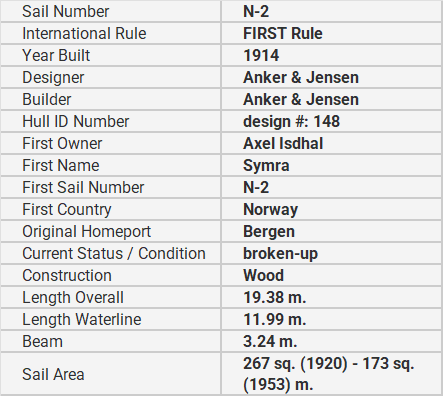
Symra was a First Rule International Twelve Metre designed and built in 1914 by the renowned Norwegian partnership Anker & Jensen, one of the most influential Scandinavian yacht design and construction firms of the early 20th century. The yard produced several internationally successful racing yachts during this period, and Symra was among its most notable Twelve Metres.
Rig & Technical Significance
Symra is widely regarded as the first Twelve Metre in the world to sail with a Bermudan rig, a highly significant innovation at a time when gaff rigs still predominated in the class. This early adoption anticipated the eventual universal shift to Bermudan rigs within the Twelve Metre Class and contributed to her strong early competitive reputation.
Early Racing Career
In 1914, Symra competed prominently in Europe Week, with Johan Anker himself aboard. She emerged as the standout yacht of the 12 Metre Class, racing against leading Scandinavian contemporaries including Erna Signa (Sweden), Sybillan (Sweden), and Ierne (Finland). Her performance during this regatta firmly established her as one of the premier Twelve Metres of her era.
Interwar Competition
Symra remained active in major Scandinavian regattas through the interwar years. In 1933, she took part in the KNS Jubilee Regatta, finishing second once, third twice, and fourth once across five races. The highly competitive fleet included notable Twelve Metres such as Caprice, Magnolia, Danseuse III, Erna Signa, Vineta, Gavotte III, Ierne, and Tove Lillian, underscoring the level at which Symra continued to compete nearly two decades after her launch.
Registry & Classification
From 1936, Symra was listed in Lloyd’s Register as “formerly International Rating Class 12 Metre”, reflecting her First Rule origins and continued recognition as a Twelve Metre under evolving registry practices.
Ownership History
From 1914 to 1949, Symra was owned by Axel Isdahl, based in Bergen, Norway, during which time she retained her original name and racing identity. Between 1950 and 1973, ownership passed to Øivind Lorentzen, with Oslo recorded as her home port. In 1952, an auxiliary engine was installed, marking her transition from a pure racing yacht to limited cruising use.
Later Years & Loss
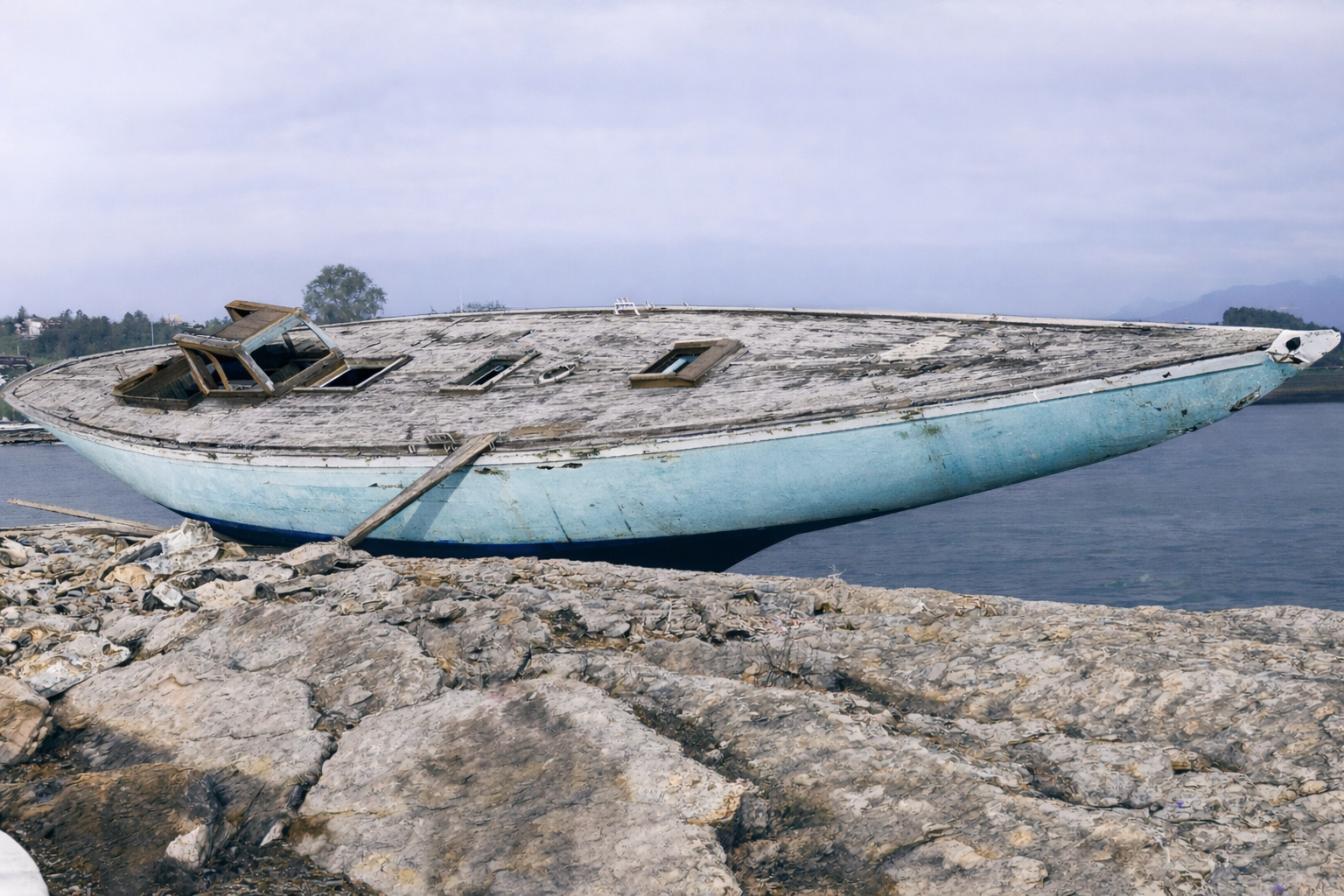
By the early 1970s, Symra had fallen out of active use. A 1974 photograph documents her lying abandoned on the shore at Vollen, Norway, in visibly deteriorated condition. The yacht was subsequently broken up by her owner, who chose not to undertake a restoration. Her loss removed one of the earliest and most historically important Bermudan-rig Twelve Metres from the fleet.
Historical Significance
Symra occupies a distinguished place in Twelve Metre history as a pioneering First Rule yacht, notable both for her early competitive success and for introducing the Bermudan rig to the class. Her long lifespan—from pre-World War I racing through post-war decline—mirrors the broader evolution of the Twelve Metre Class itself and underscores the lasting influence of Anker & Jensen on international yacht design.