
Ull II
Design & Rule Context
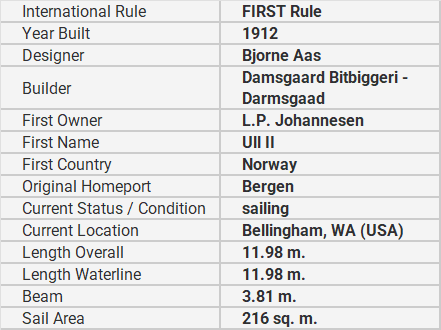
Ull II was built to the International First Rule and represents an early Scandinavian interpretation of the Twelve Metre Class during the formative years of the International Rule. She is a double-ended yacht (spissgatter), a hull form deeply rooted in Norwegian design tradition and particularly well suited to the conditions of Nordic waters.
KNS Rating and Early Classification
In 1912, a special committee appointed by the Royal Norwegian Yacht Club (KNS)—comprising Johan Anker, Christian Jensen, and Halvdan Hansen—decided to rate Raak and Ull I under the International First Rule. As part of this process, an “E” sail designation was assigned, reflecting their acceptance into International Rule competition under KNS authority.
Following World War I, a similar decision was taken for Mars (later Skoiern) and Liv (later Lady), illustrating the Norwegian Yacht Club’s important role in integrating Scandinavian yachts—often differing in form from British and Continental designs—into the early Twelve Metre framework.
Construction & Type
Class: International First Rule Twelve Metre
Hull form: Double-ended (spissgatter)
Sister ship: Raak
Ull II belongs to a very small group of First Rule Twelves that combined International Rule measurement with a distinctly Norwegian double-ended hull, making her a rare and historically significant example within the class.
Ownership History
1914–1935:
L. B. JohannesenName: Ull II
Home port: Bergen, Norway
After 1935:
O. Grolle Olsen
(Details of racing activity during this later Norwegian ownership are limited in surviving records.)
Registry Status
From 1928, Ull II was entered in Lloyd’s Register with the designation:
“Formerly International Rating Class 12 Metre.”
This wording reflects the transitional status of several early Scandinavian Twelves that had been accepted and raced under the International Rule but later fell outside active class competition as the rule evolved.
Survival and Identification as Delphine
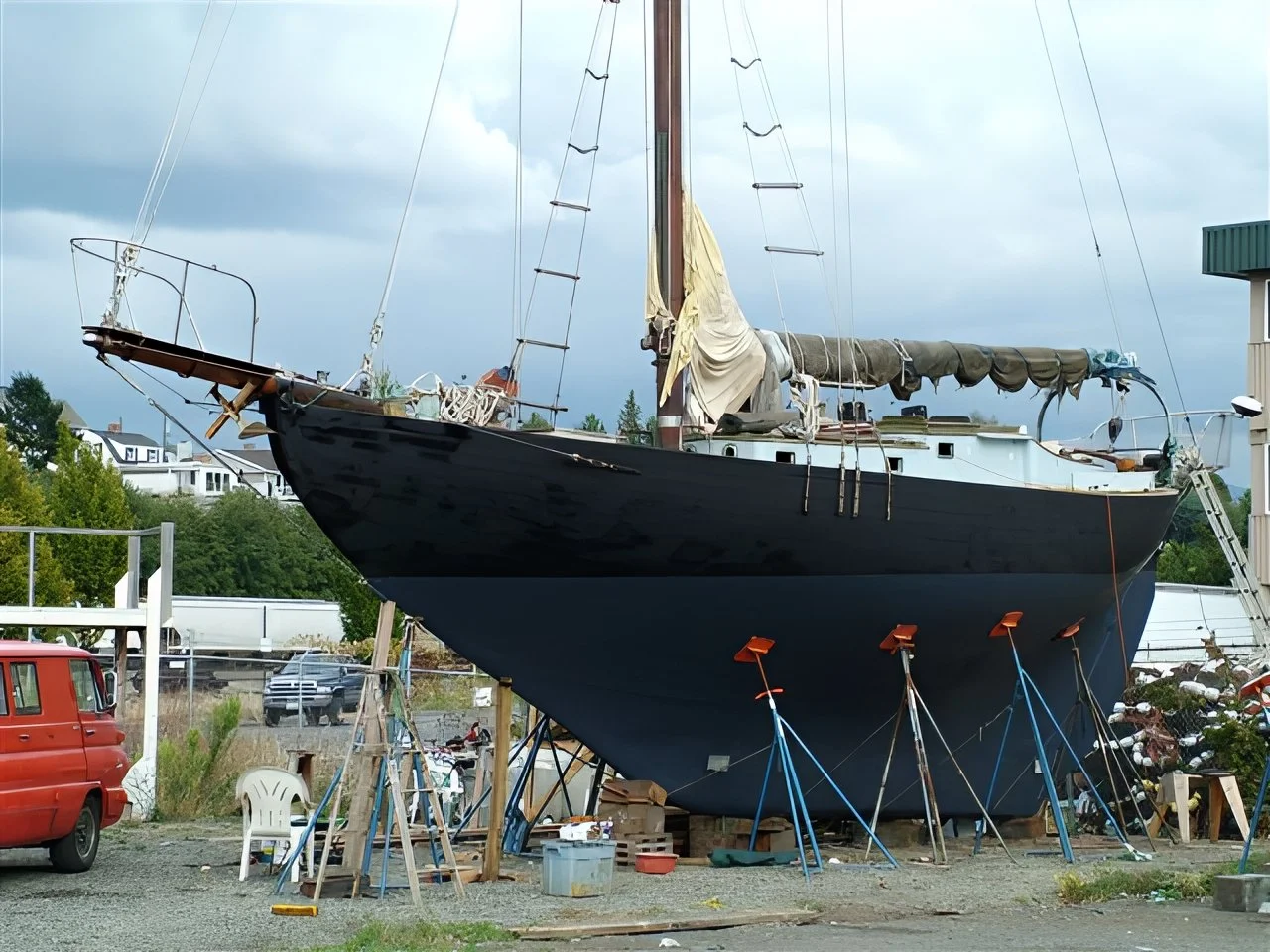
Long believed to have disappeared after her Norwegian years, Ull II is now identified as surviving in the United States under the name Delphine. This identification is supported by direct comparison between the original Ull II plan and modern photographs of Delphine, including:
An identical spissgatter (double-ended) stern form, exceptionally narrow and deep, characteristic of early Norwegian yacht design.
Matching sheer line, freeboard, and hull proportions, consistent with a First Rule Twelve Metre of the pre–World War I period.
Overall scale and geometry incompatible with later designs, but fully consistent with Ull II’s documented type and era.
The rig and deck arrangement of Delphine reflect later adaptations typical of early racing yachts that survived into post-war cruising use; these changes do not alter the underlying hull identity.
Historical Significance
Ull II occupies a unique position in Twelve Metre history as:
One of the earliest Norwegian First Rule Twelves
A rare double-ended (spissgatter) Twelve Metre
Part of the Raak–Ull lineage, illustrating how Scandinavian designers adapted the International Rule to local seafaring traditions
An example of a rediscovered First Rule Twelve, surviving into the present day as Delphine
Her story highlights both the experimental diversity of the First Rule era and the remarkable longevity of well-built Scandinavian yachts.