
White Streak
Design and Concept
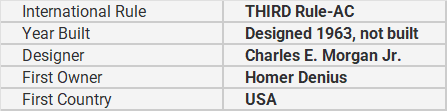
The project was developed by Charles E. Morgan, Jr., an American naval architect, yacht builder, sailmaker, and accomplished offshore racer. Although Morgan had no prior experience as a skipper or syndicate leader in the America’s Cup, he had served as a crew member aboard Columbia during the 1962 America’s Cup selection trials, giving him direct exposure to 12-Metre performance and handling at the highest level.
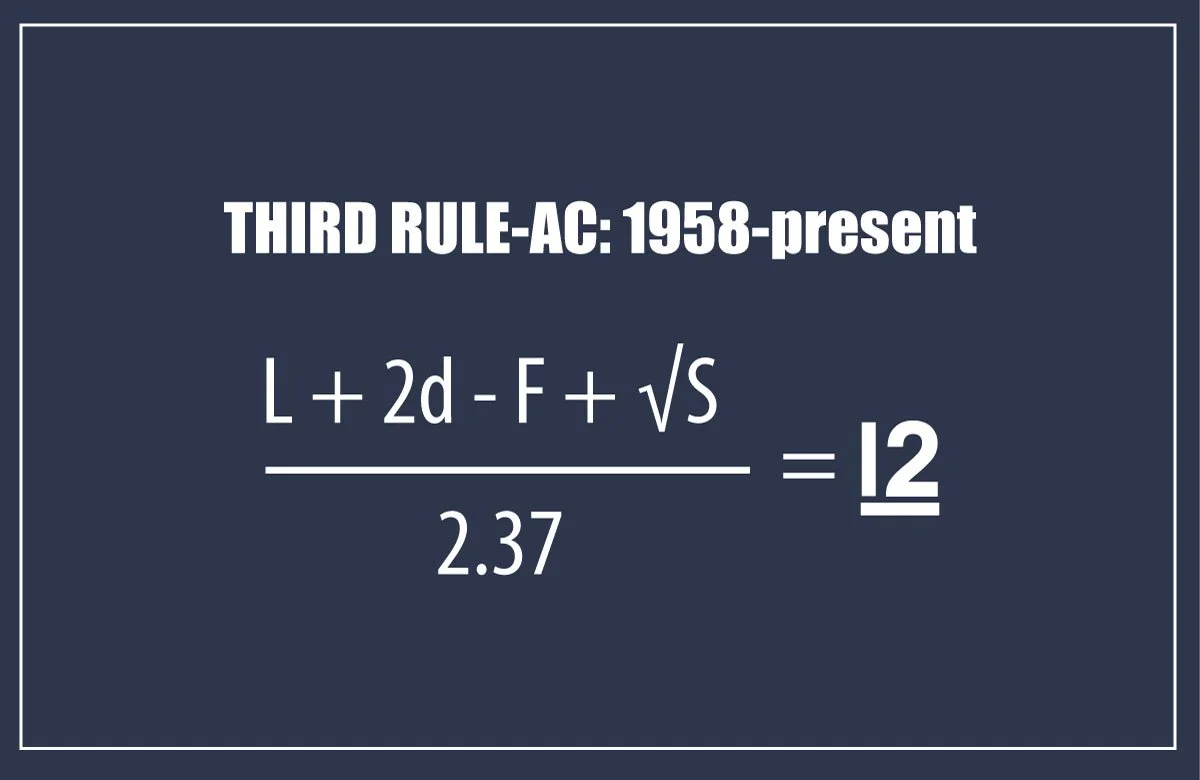
White Streak was conceived as a technical exploration of Morgan’s own design ideas, rather than as a fully funded challenge yacht. With the support of Homer Denius, Morgan produced a scale model of the design and conducted tank testing to evaluate hull form and hydrodynamic behavior under the Third Rule.
Project Termination
Despite the promising technical work, the White Streak project was ultimately abandoned due to constraints of time and funding. As a result:
The yacht was never built
The project never progressed beyond the model-testing phase
No campaign, syndicate, or challenge entry was formed
The scale model of White Streak survives and is preserved at the AMIA Museum in Escondido, California, where it remains a tangible record of the project.
Legacy
Although White Streak itself never reached construction, the design work was not lost. The concepts developed during the project directly influenced Morgan’s later work, most notably leading to the design and construction of Heritage in 1970, a successful and well-documented American 12-Metre yacht.
In this way, White Streak occupies an important place in 12-Metre history as a transitional design study—illustrating the iterative, experimental nature of America’s Cup development during the late International Third Rule era.
Summary
Class: 12 Metre Class (International Third Rule)
Status: Project only — never built
Designer: Charles E. Morgan, Jr.
Tank testing: Conducted using a scale model
Sail number: None issued
Outcome: Project abandoned due to time and financial constraints
Legacy: Direct precursor to Heritage (1970)
Surviving artifact: Model preserved at the AMIA Museum, Escondido, CA